
Language fluency for innovation
9 - 12 months

Language fluency for innovation
As we evolve our programs to reflect today’s technology landscape, the certificate in Computer Programming is under review and is not currently open for new enrollment. If you are enrolled in this certificate and are finishing up your courses, please reach out to us at extension@ucsc.edu. We will help you plan your journey.
After reviewing the current market conditions and engaging with industry, we are now offering new short programs, that are flexible paths to get the skills you need fast. During this time, our certificate programs continue to be under review and we are committed to assisting all enrolled students to finish the certificate programs. To learn more, visit our Short Programs page.
You are invited to enroll in individual courses to build your knowledge and develop new skills.
Understanding how to write and test code has become a foundational criteria for tech jobs across most industries. In the UCSC Silicon Valley Extension Computer Programming certificate program you learn front end and back end web development technologies, gaining a strong foundation in software development. You learn to apply coding skills across platforms—from computers and mobile devices, to web development and the cloud.
Total 5–7 courses (minimum 14 quarter units)
| Date | Start Time | End Time | Meeting Type | Location |
|---|---|---|---|---|
| Tue, 01-05-2027 | 12:01am | 12:02am | Online Self-Paced | ONLINE |
| Tue, 04-06-2027 | 11:58pm | 11:59pm | Online Self-Paced | ONLINE |
Online Self-Paced courses have a structured learning environment where students are allowed to complete the work at their own pace. Students may complete the coursework early or use the entire duration of the course. This course is largely self-study with instructor guidance and includes online learning modules, assignments, and/or quizzes. All course materials and assignments will be available at the beginning of the course on Canvas, our learning management system.
For this section, student access begins on January 5, but you may still enroll until February 9. All course work must be completed by 11:59 pm on April 6, 2027.
*All grades will be processed at the end of the course.
You will be granted access in Canvas to your course site and course materials approximately 24 hours prior to the published start date of the course.
Required Text: Object Oriented Analysis & Design Cookbook: Introduction to Practical System Modeling, Edwin Mach, ISBN-10: 167094316X, ISBN-13: 9781670943163.
Recommended Text: UML Distilled: A Brief Guide to the Standard Object Modeling Language, 3rd Edition, Martin Fowler, Addison-Wesley, ISBN-10: 0321193687, ISBN-13: 978-0321193681.
| Date | Start Time | End Time | Meeting Type | Location |
|---|---|---|---|---|
| Sat, 09-19-2026 | 9:00am | 3:30pm | Live-Online | REMOTE |
| Sat, 09-26-2026 | 9:00am | 3:30pm | Live-Online | REMOTE |
| Sat, 10-03-2026 | 9:00am | 3:30pm | Live-Online | REMOTE |
| Sat, 10-10-2026 | 9:00am | 3:30pm | Live-Online | REMOTE |
| Sat, 10-17-2026 | 9:00am | 3:30pm | Live-Online | REMOTE |
This class is offered in an online synchronous format. Students are expected to log into this course via Canvas at the start time of scheduled meetings and participate via Zoom, for the duration of each scheduled class meeting.
To see all meeting dates, click "Full Schedule" below.
You will be granted access in Canvas to your course site and course materials approximately 24 hours prior to the published start date of the course.
Required Tools & Materials: PyCharm
|| Skills Needed:
Prerequisites / Skills Needed
| Date | Start Time | End Time | Meeting Type | Location |
|---|---|---|---|---|
| Sat, 02-27-2027 | 9:00am | 3:30pm | Live-Online | REMOTE |
| Sat, 03-06-2027 | 9:00am | 3:30pm | Live-Online | REMOTE |
| Sat, 03-13-2027 | 9:00am | 3:30pm | Live-Online | REMOTE |
| Sat, 03-20-2027 | 9:00am | 3:30pm | Live-Online | REMOTE |
| Sat, 03-27-2027 | 9:00am | 3:30pm | Live-Online | REMOTE |
This class is offered in an online synchronous format. Students are expected to log into this course via Canvas at the start time of scheduled meetings and participate via Zoom, for the duration of each scheduled class meeting.
To see all meeting dates, click "Full Schedule" below.
You will be granted access in Canvas to your course site and course materials approximately 24 hours prior to the published start date of the course.
Required Tools & Materials: PyCharm
|| Skills Needed:
Prerequisites / Skills Needed
| Date | Start Time | End Time | Meeting Type | Location |
|---|---|---|---|---|
| Tue, 01-05-2027 | 12:01am | 12:02am | Online Self-Paced | ONLINE |
| Tue, 04-06-2027 | 11:58pm | 11:59pm | Online Self-Paced | ONLINE |
Online Self-Paced courses have a structured learning environment where students are allowed to complete the work at their own pace. Students may complete the coursework early or use the entire duration of the course. This course is largely self-study with instructor guidance and includes online learning modules, assignments, and/or quizzes. All course materials and assignments will be available at the beginning of the course on Canvas, our learning management system.
For this section, student access begins on January 5, but you may still enroll until February 9. All course work must be completed by 11:59 pm on April 6, 2027.
You will be granted access in Canvas to your course site and course materials approximately 24 hours prior to the published start date of the course.
Required Tools & Materials: Access to a computer with Python version 3.6 or higher and Jupyter Notebook is required. The recommended software to obtain the required tools for this course is Anaconda, free Individual Edition: https://www.anaconda.com/products/individual
Recommended Tools & Materials:
Learn to Program with Python 3: A Step-by-Step Guide to Programming, 2nd edition, Irv Kalb, Apress, 2018, ISBN: 9781484238783.
Murach's Python Programming (2nd Edition), Joel Murach, Michael Urban , Mike Murach and Associates, 2021, ISBN: 9781943872749.
Think Python, Allen B. Downey, O'Reilly Media, Inc., 2015, ISBN: 9781491939413.
| Date | Start Time | End Time | Meeting Type | Location |
|---|---|---|---|---|
| Thu, 09-17-2026 | 6:00pm | 9:00pm | Live-Online | REMOTE |
| Thu, 09-24-2026 | 6:00pm | 9:00pm | Flexible | SANTA CLARA / REMOTE |
| Thu, 10-01-2026 | 6:00pm | 9:00pm | Flexible | SANTA CLARA / REMOTE |
| Thu, 10-08-2026 | 6:00pm | 9:00pm | Flexible | SANTA CLARA / REMOTE |
| Thu, 10-15-2026 | 6:00pm | 9:00pm | Flexible | SANTA CLARA / REMOTE |
| Thu, 10-22-2026 | 6:00pm | 9:00pm | Flexible | SANTA CLARA / REMOTE |
| Thu, 10-29-2026 | 6:00pm | 9:00pm | Flexible | SANTA CLARA / REMOTE |
| Thu, 11-05-2026 | 6:00pm | 9:00pm | Flexible | SANTA CLARA / REMOTE |
| Thu, 11-12-2026 | 6:00pm | 9:00pm | Flexible | SANTA CLARA / REMOTE |
| Thu, 11-19-2026 | 6:00pm | 9:00pm | Flexible | SANTA CLARA / REMOTE |
9/17 - Tonight's meeting will be via Zoom.
Students may still enroll if they missed the 1st class session. However, they need to communicate with the instructor via Canvas and catch up on all missed work prior to the 2nd class meeting.
This class meets simultaneously in a classroom and remotely via Zoom. Students are expected to attend and participate in the course, either in-person or remotely, during the days and times that are specified on the course schedule. Students attending remotely are also strongly encouraged to have their cameras on to get the most out of the remote learning experience. Students attending the class in-person are expected to bring a laptop to each class meeting.
To see all meeting dates, click "Full Schedule" below.
You will be granted access in Canvas to your course site and course materials approximately 24 hours prior to the published start date of the course.
Required Tools & Materials: None
Recommended Programming Environment: Python, either local computer or Google Colab. Prefer GPU setup.
|| Prerequisites:
Prerequisites / Skills Needed
| Date | Start Time | End Time | Meeting Type | Location |
|---|---|---|---|---|
| Tue, 01-12-2027 | 6:00pm | 9:00pm | Live-Online | REMOTE |
| Tue, 01-19-2027 | 6:00pm | 9:00pm | Live-Online | REMOTE |
| Tue, 01-26-2027 | 6:00pm | 9:00pm | Live-Online | REMOTE |
| Tue, 02-02-2027 | 6:00pm | 9:00pm | Live-Online | REMOTE |
| Tue, 02-09-2027 | 6:00pm | 9:00pm | Live-Online | REMOTE |
| Tue, 02-16-2027 | 6:00pm | 9:00pm | Live-Online | REMOTE |
| Tue, 02-23-2027 | 6:00pm | 9:00pm | Live-Online | REMOTE |
| Tue, 03-02-2027 | 6:00pm | 9:00pm | Live-Online | REMOTE |
| Tue, 03-09-2027 | 6:00pm | 9:00pm | Live-Online | REMOTE |
| Tue, 03-16-2027 | 6:00pm | 9:00pm | Live-Online | REMOTE |
This class is offered in an online synchronous format. Students are expected to log into this course via Canvas at the start time of scheduled meetings and participate via Zoom, for the duration of each scheduled class meeting.
To see all meeting dates, click “Full Schedule” below.
You will be granted access in Canvas to your course site and course materials approximately 24 hours prior to the published start date of the course.
Required Tools & Materials: None
Recommended Programming Environment: Python, either local computer or Google Colab. Prefer GPU setup.
|| Prerequisites:
Prerequisites / Skills Needed
Please enroll in the Computer Programming Certificate Completion Fee only when all of the certificate requirements have been met and your final grades are posted.
Courses are best taken in order of complexity—I, II, III; Beginners, Comprehensive, Advanced. Other courses may be taken in any order. You can learn more about each course in the Syllabus Library.
Please review the course descriptions to ensure that you have taken necessary prerequisites or meet the requirements through job experience or previous education.
Some engineering and technology courses may be listed in more than one program. However, only one course may be shared between two E&T certificate programs unless otherwise noted.
Please note that only letter grades of C or higher may be applied to a certificate, and in some programs, students may have more stringent requirements. Students in most employer- and government-sponsored payment programs, such as workforce development, as well as international students on F-1 visas, need to maintain a B average to meet their requirements.
See Grading and Credits Policy for further information.

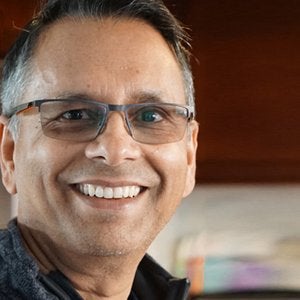
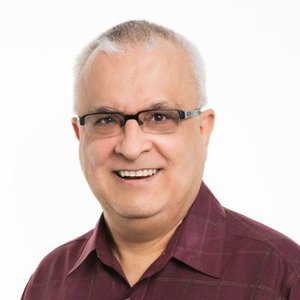
BINEET SHARMA, M.S.C.S., is a seasoned technologist with more than 30 years’ experience in technical architecture, upper level management, professional teaching, and entrepreneurship. He has held a variety of leadership roles in all aspects of the software development life cycle, including CEO of CashonAd, a mobile advertising app platform; and co-founder of OnTick, a technical analysis tool for stock market data positions. Previously he held management and technical positions at F1Soft International, Soffront Software, Concuity, National Data Corp., and Epiphany. He is also the founding president of the Computer Association of Nepal, which focuses on regional training, education, and technical support to Nepalese communities in need. Sharma has master’s degrees in both computer science and mining engineering from Southern Illinois University, Carbondale and is a certified ScrumMaster. His passion for teaching technology has inspired more than 100 computer classes throughout Silicon Valley and the greater Bay area on topics ranging from operating systems, data structures and C to Visual C++, and Java programming. He has served as program chair of the UCSC Silicon Valley Extension Computer Programming certificate program since 2019 and chair of the Java Development specialization since that program was founded in 2022.
BINEET SHARMA, M.S.C.S.
Instructor | Program Chair, Computer Programming Certificate Program, UCSC Silicon Valley Extension
IGNACIO TERRIZZANO, M.S.
Senior Research Software Architect, IBM Research